


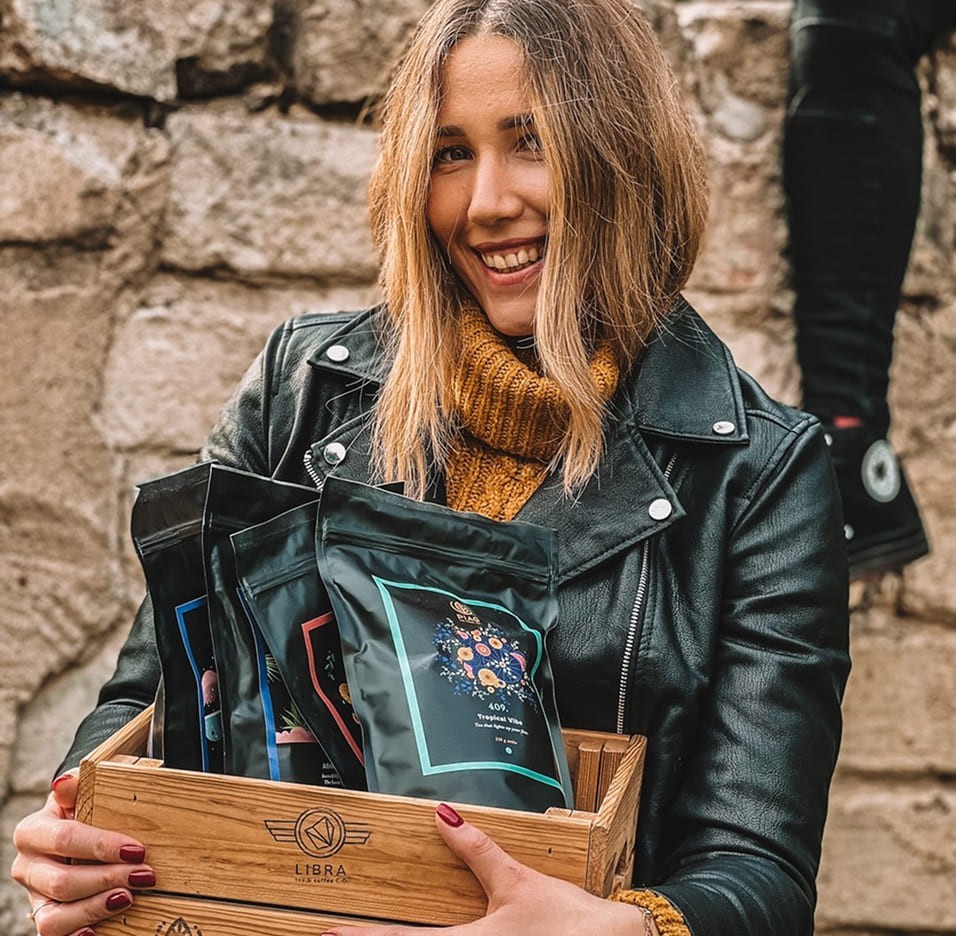

The name of our Darling tea is, of course, not accidental. This fruity bomb hidden within was intended as a metaphor for the words we feed our loved ones, our loved ones—simply everyone we love unconditionally.
We are not afraid to write about love. You already know that. The awareness of impermanence — the fragility of everything that surrounds us — is so overwhelming that it hardly seems worth focusing on anything else. Tenderness — which we summon again and again, like a benevolent spirit, and without which love simply cannot exist — is for us like a lighthouse for sailors, like a horizon we follow blindly, like the warmth of a hand we trust above all else.
But tenderness is also the words we use when speaking to those closest to us…
The name of our tea, Darling, is no coincidence. The fruit-filled explosion hidden within it was meant to be a metaphor for the words we offer to those we love — our beloveds, all those we care for with unconditional love.
Such love floats beyond time like a quiet breath. We barely notice it, yet it always finds a way to endure. It remains even when the world falls apart into millions of pieces. Unconditional love is the memory of the heart — breath and light.
Let us pause here, in this place that feels safe and familiar, and dare — just for a moment — to step outside it. When we write about love, the most beautiful snapshots of our lives appear in our minds: our loved ones smiling, happiness rising within us. But what if we stepped outside this bubble and looked at the world differently — as seekers? What would we be searching for? Tenderness. Still tenderness. Only this time — in other people. Or perhaps, ultimately, within ourselves.
Would we be kinder to others if we knew that the person we pass on the street, or meet in a shop, on a train, in a museum — that all of them have loved before, that they too have been both givers and receivers of tenderness? Would we show more respect if we knew that…
- That man begging for spare change, who irritates us so deeply, was once a painter who spent half a century writing letters to one woman — letters he never sent.
- That stern teacher who rarely smiles keeps a fragile, dried bouquet of wildflowers in her calendar — flowers given to her by her late husband. They shared only ten years together.
- That unpleasant neighbour who refuses to return the children’s ball is the same woman who visits an elderly watchmaker every day, simply to talk to him, because he is lonely and unwell.
- That the strangest girl in class keeps her brother’s books at home, afraid to touch them, fearing it might erase the last trace of his hands.
- That the street musician near the station plays the same melody every day on his harmonica — because once, long ago, he danced to it with a stranger.
- That elderly woman tending her raspberry bushes, even though she doesn’t like raspberries. She planted them for grandchildren who no longer visit. The bushes grow thick and wild — tangled like memories.
- And that ever-smiling postwoman who rides her father’s bicycle, even through rain and cold. She has never spoken about him — but perhaps one day, on some autumn afternoon, in a cosy flat, over a cup of tea…
There are as many stories like these — happy and unhappy, simple and complex — as there are people. Everyone carries their own tenderness. And love stories should be told over tea. It is tea that wraps us in warmth and invites confession. Just like our Darling. It smells of simplicity and the sweetness of baked apples, softening slowly, like a heart. There is the tart freshness of raspberries, and a slightly wild note of blackberries — a reminder that true feeling can be tangled like a thorny bush, one that scratches before it offers flavour. And there must be fire — for no love exists without it — which is why we add dragon fruit: passion itself, overwhelming, merciless, yet irresistibly juicy.
Above all these stories — these and countless others known to the world — floats the aroma of wild rose. For it is wild rose that we associate with love. Its flavour is delicate, yet indestructible, like the memory of a hand once held in your own.
Why do we so rarely appreciate the touch of a hand? We should. Because later, at the twilight of life, memories sink to the bottom of the soul like dark raspberry and blackberry leaves — subtle, unassuming, yet bearing witness to someone’s presence, someone’s devotion, someone’s care. And it is that very touch we long for most. That is the touch we remember.
Amid all these hymns and lofty metaphors, there is also room for ordinary life — for everyday existence and the pure, primal taste of the earth. That is why beetroot is here too: simple, grounding, reminding us that whatever lasts must have roots. That if a feeling is to endure, it must grow deep within us.
Mallow petals — delicate and soft, like love letters yellowed by time, yet never stripped of meaning. Strawberries — sweet like a first glance, profound like whispered words before sleep. And somewhere at the very end, lemon peel: bright and refreshing, like the memory of someone’s smile — the kind that helps us endure even the hardest moments.
This is the taste of feelings that do not end. Feelings that — like the great, beautiful loves of bygone eras — last until the final breath, and then continue on, in stories, in aromas, and in that quiet conviction that what is true is eternal.
Tell someone today: You are — and that is enough.
Let us decline tenderness through every case. Let us be tender narrators of our own life stories. It really is that simple… Especially with a cup of tea brewed with tenderness.