Matcha Genmaicha
Jade-green matcha blended with Japanese Sencha and roasted rice.
Matcha Genmaicha is the perfect first step into the world of matcha—a vibrant jade-green tea in powdered form, filled with the energy of sunlight. It combines the infusion of premium Japanese Sencha with the finely milled powder of the finest green tea leaves. It is like green magic—photosynthesis—nature's miracle and the very foundation of life on Earth.
And the roasted rice adds a gentle touch of sweetness...
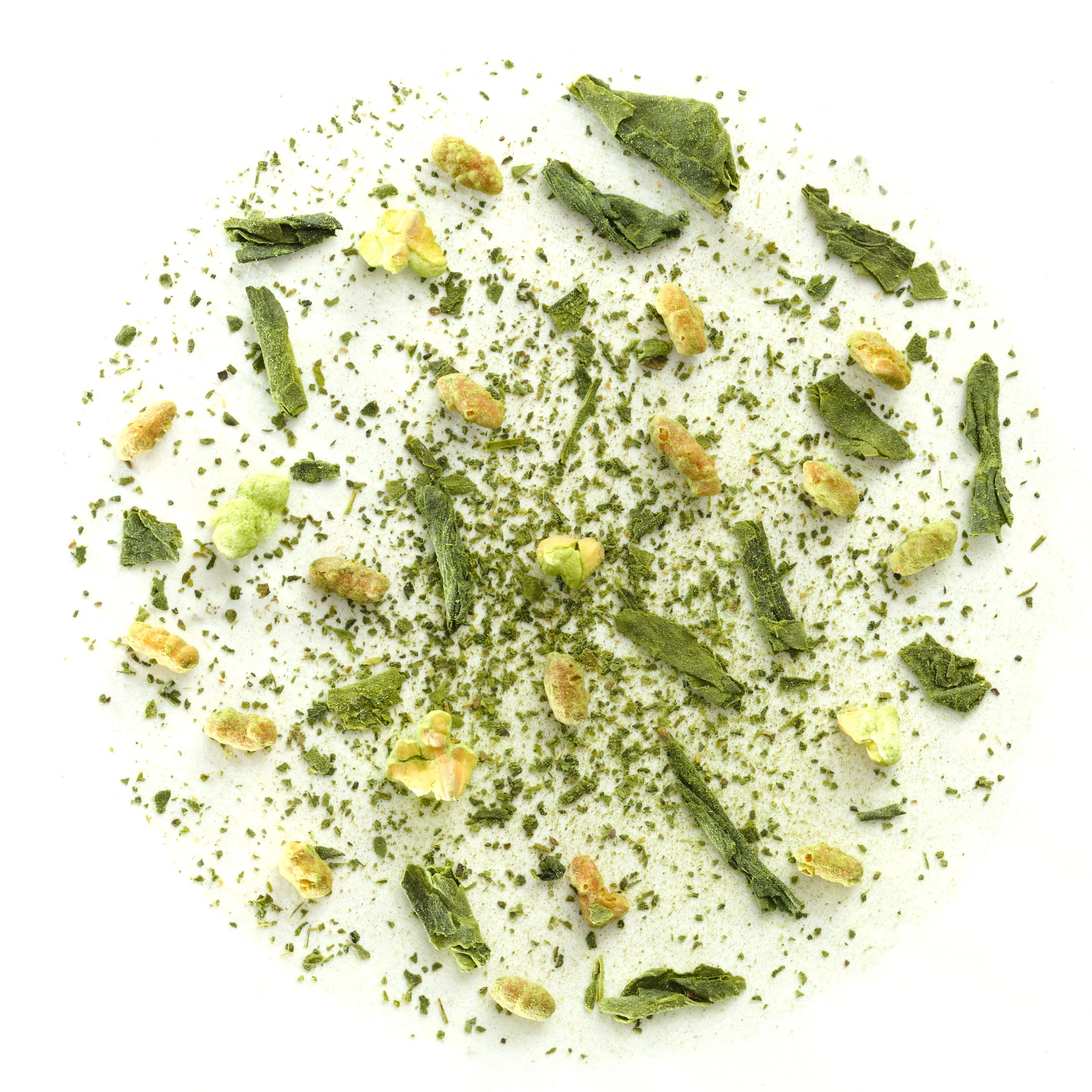
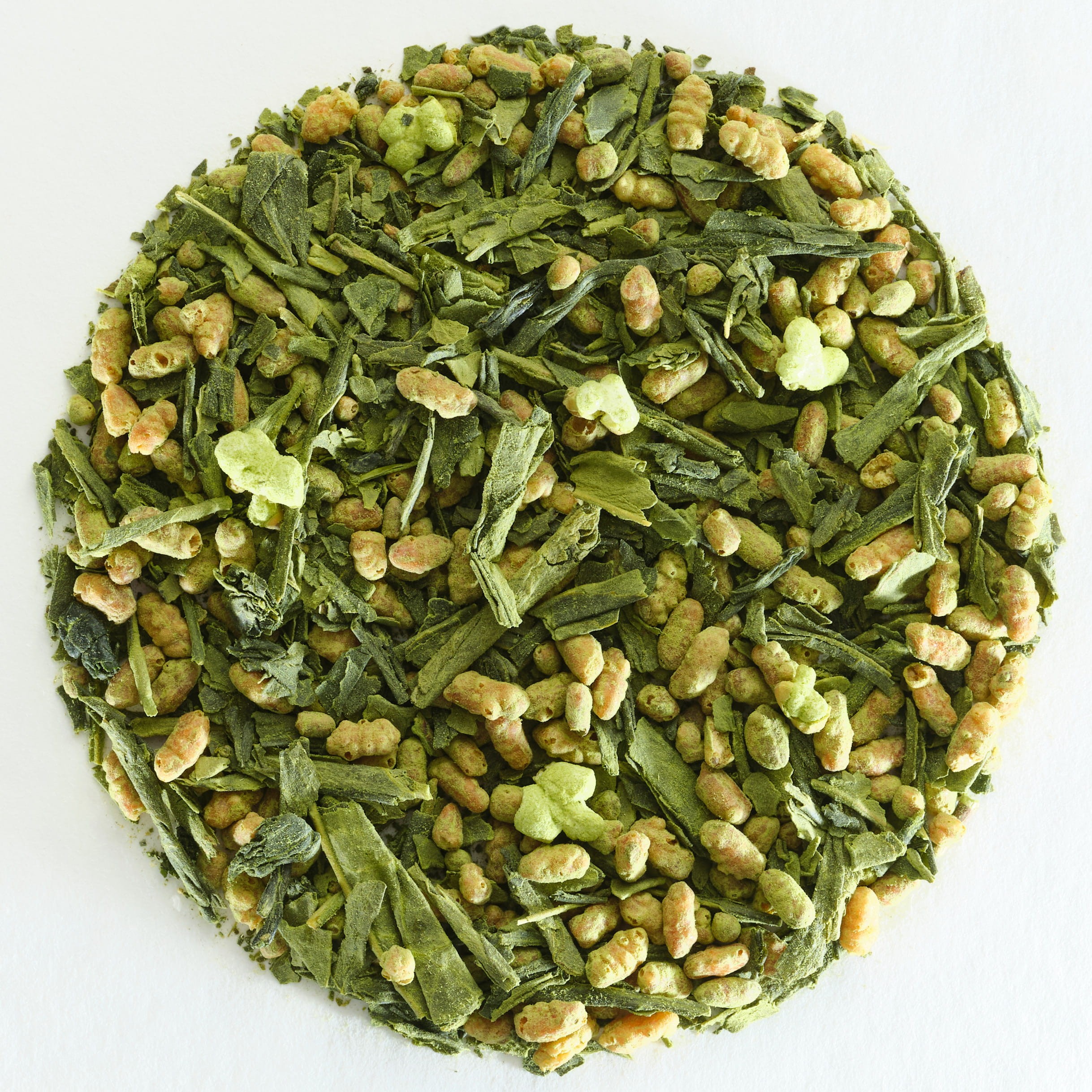
Ingredients: Japanese green tea, roasted rice, puffed rice.
Instructions: Pour over freshly boiled water cooled to approximately 80°C and steep for 1½–2 minutes.
Please remember that your tea will be only as good as the water you use to brew it.
Matcha Genmaicha – Nature's Green Miracle
Taste: A harmonious blend of the vibrant freshness of Japanese Sencha and the velvety depth of matcha. Distinct vegetal notes intertwine with the warm aroma of roasted rice and delicate hints reminiscent of freshly popped popcorn. The infusion is creamy, gently sweet, with a pleasant umami character and a long, soothing finish. This is a tea that envelops you in tranquillity while revealing that matcha can be surprisingly smooth and approachable.
Wellness: Matcha Genmaicha combines the antioxidant richness of matcha with the renowned benefits of Japanese green tea. Together, they help support the body's natural defence against oxidative stress, promote concentration, and provide a steady, gently sustained source of energy. The naturally occurring L-theanine encourages calmness and mindful focus, while the roasted rice lends the infusion a soothing, easy-to-enjoy character, making it an excellent choice both for starting the day and for moments of peaceful relaxation.
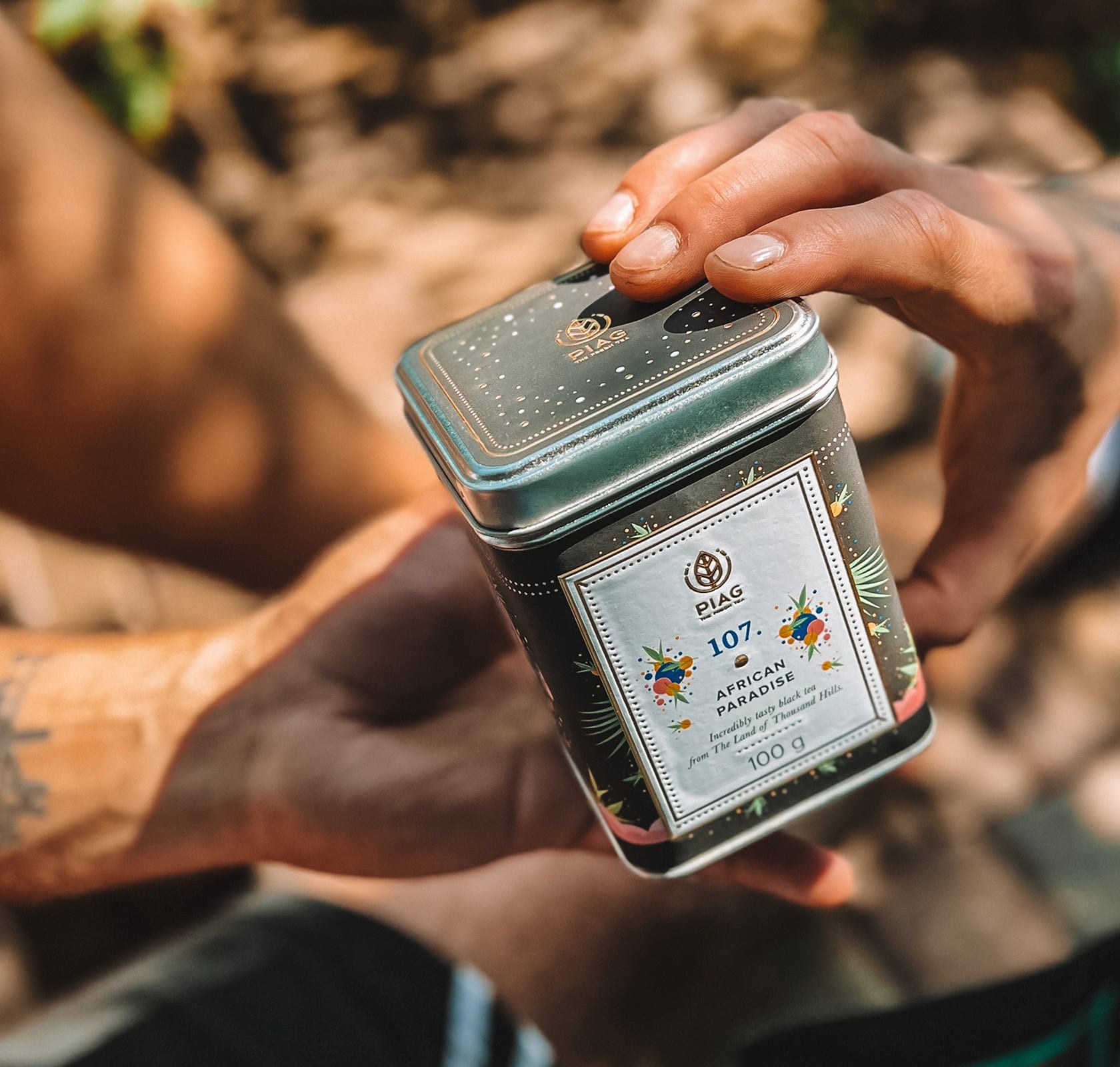
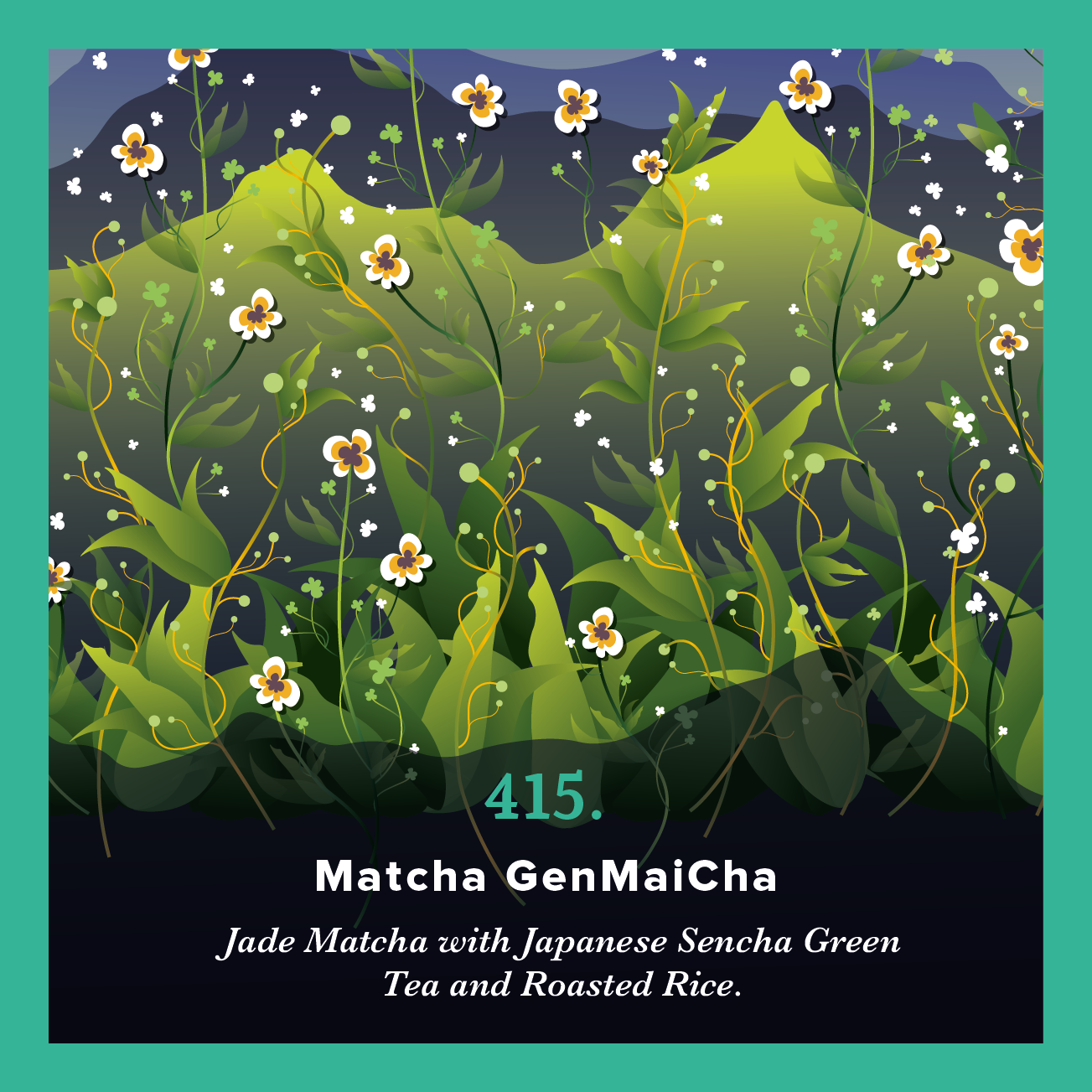
Packaging: Matcha Genmaicha Piag Tea is presented in an elegant tin that will complement any kitchen. The beautiful artwork was created by illustrator and designer Katarzyna Korzeniowska. Every tin is labelled and packed by hand. Everything we do, we do with love.
Matcha Genmaicha – Here and Now
Not every tea seeks to impress from the very first sip. Some reveal their true beauty only when we slow down, take a moment to sit in stillness, and devote ourselves entirely to a single ritual. Matcha Genmaicha is a perfect companion on that journey—humble in appearance, yet remarkably profound. It brings together the elegance of Japanese green tea and the comforting warmth of roasted rice, reminding us that true harmony is born from balance, not excess. Every cup becomes a quiet ritual of stillness, gently guiding us back to that elusive state of here and now.
In a world that never seems to stop, it invites us to breathe, to be present, and to rediscover the beauty of life's simplest pleasures.
If You Enjoy Discovering More – Curiosities for Tea Connoisseurs
The Story of Genmaicha – From Monasteries to the Modern World
9th Century – Tea Arrives in Japan
The earliest records of tea drinking in Japan date back to the 9th century. Tea was introduced from China by Buddhist monks who discovered its remarkable qualities during their travels. At first, it was a rare and precious commodity, enjoyed primarily by the aristocracy and within monastic communities.
12th Century – The Birth of Japan's Tea Tradition
In the 12th century, the monk Eisai brought tea seeds from China and planted them at Kōzan-ji Temple in Kyoto. This moment is widely regarded as the beginning of intentional tea cultivation in Japan. Eisai promoted green tea not only as a source of well-being but also as an aid to meditation and sustained concentration.
18th Century – The Rise of Sencha and the Evolution of Modern Matcha
During the 18th century, Nagatani Sōen developed the production method for Sencha, revolutionising Japanese tea craftsmanship. To this day, Sencha remains the country's most popular style of green tea. Around the same period, the production of matcha was further refined, giving rise to the vibrant emerald-green powder made from the finest hand-selected tea leaves that we know today.
19th Century – The Birth of Genmaicha
In the 19th century, tea growers and merchants began blending roasted rice with green tea. Initially, it was a practical way to extend tea supplies and make the beverage more affordable for ordinary Japanese households. Over time, however, people discovered that roasted rice contributed a wonderfully warm, nutty aroma, creating an exceptionally harmonious pairing with green tea. Thus, Genmaicha was born.
20th Century – Tea Conquers the World
Advances in tea production and international trade allowed both matcha and Genmaicha to gain popularity far beyond Japan. As Japanese culture attracted growing interest around the world, these teas found their way into Europe and North America, becoming symbols of healthy living and the philosophy of Zen.
Today – Where Tradition Meets Modernity
Today, Genmaicha is one of Japan's most beloved tea blends and is increasingly enjoyed in tea houses and restaurants around the world. A particularly popular variation is Matcha Genmaicha, which combines traditional Genmaicha with finely powdered matcha. The result is an infusion with a deeper emerald colour, a creamier texture, and a richer umami flavour, while preserving the signature warm aroma of roasted rice.
It is a tea that has travelled an extraordinary path—from a humble everyday drink to monastic rituals, from Japanese tea ceremonies to becoming a modern symbol of mindfulness, simplicity, and living in harmony with nature.
If You Enjoy Stories About Tea:
There are teas that captivate with their flavour. There are teas that awaken the senses and provide gentle energy. And then there are those that offer something even more precious—they teach us how to be truly present.
For centuries, Genmaicha has held a special place in Japanese culture. Its story is not one of extravagance or luxury. On the contrary, it is rooted in simplicity—a simplicity that, in the philosophy of the Far East, has never been a symbol of poverty, but of conscious choice. Green tea leaves blended with roasted rice remind us that the greatest harmony is born when what is noble meets what is ordinary.
It is no coincidence that this infusion accompanied Buddhist monks during meditation. The warmth rising from the bowl, the delicate aroma of roasted grain, and the deep green of the tea became part of the practice of mindfulness. Every sip was an invitation to let go of unnecessary haste and return to the only place where life truly unfolds—the present moment.
When we imagine perfect meditation, we often picture monks as its greatest masters. There is no need to search far for an example worth following. We already have one. All we need is an exceptional tea.
All we need is Matcha Genmaicha.
This is a tea that teaches humility before the world. It reminds us that wholeness can only be found through balance. Green tea carries within it the untamed energy of nature, while roasted rice bears the imprint of human hands, patience, and craftsmanship. Only together do they create a flavour that neither could achieve alone.
It is, in many ways, a philosophical story of coexistence—a reminder that humanity does not stand above nature, but belongs within it.
Over time, Genmaicha made its way beyond the walls of temples and monasteries, finding a place in the homes of people regardless of their background or social standing. Even today in Japan, it is often served during important family celebrations as a quiet symbol of good fortune, prosperity, and a life built upon harmony.